


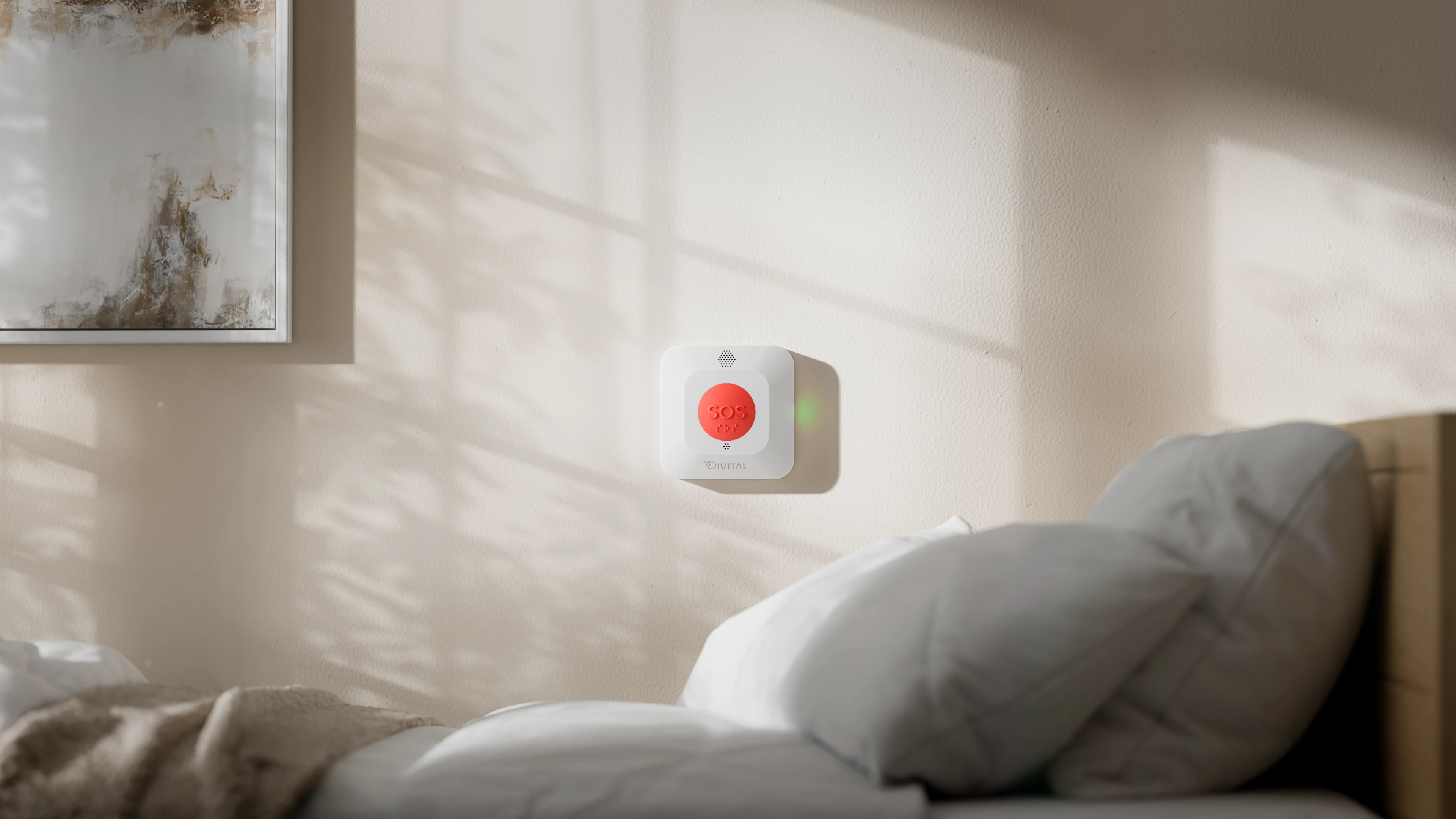


Silent alarming means that an alarm – such as from a fire alarm system – is not broadcast via sirens throughout the entire building. Instead, it is transmitted silently to staff, for example, to a caregiver's DECT phone. In care facilities, this is crucial because audible alarms can panic residents, while staff need to evacuate or assist them in a targeted manner.
At Divital, silent alarming is fully integrated into the all-in-one platform: with precise location information, a prioritized alert chain, and automatic logging.
Because different rules apply in care facilities than in office buildings: Many residents cannot react appropriately to loud alarms – some panic, while others don't even notice the alarm. Therefore, your staff needs precise information instead of noise: Where is the fire? Who needs help? Who is responsible?
Silent alarming provides exactly that and automatically documents every step. This also convinces fire departments and expert inspectors during acceptance.
Yes. The Divital platform connects directly to your existing fire alarm control panel and forwards its alerts in real-time to your staff's DECT phones. This eliminates expensive parallel structures. For instance, at a nursing home in Essen, we quickly replaced a defective legacy system. It was then approved by the certified expert and the fire department without any defects.

























Silent alarming means that an alarm – such as from a fire alarm system – is not broadcast via sirens throughout the entire building. Instead, it is transmitted silently to staff, for example, to a caregiver's DECT phone. In care facilities, this is crucial because audible alarms can panic residents, while staff need to evacuate or assist them in a targeted manner.
At Divital, silent alarming is fully integrated into the all-in-one platform: with precise location information, a prioritized alert chain, and automatic logging.
Because different rules apply in care facilities than in office buildings: Many residents cannot react appropriately to loud alarms – some panic, while others don't even notice the alarm. Therefore, your staff needs precise information instead of noise: Where is the fire? Who needs help? Who is responsible?
Silent alarming provides exactly that and automatically documents every step. This also convinces fire departments and expert inspectors during acceptance.
Yes. The Divital platform connects directly to your existing fire alarm control panel and forwards its alerts in real-time to your staff's DECT phones. This eliminates expensive parallel structures. For instance, at a nursing home in Essen, we quickly replaced a defective legacy system. It was then approved by the certified expert and the fire department without any defects.
Rapid response. In urgent cases, within a few days. In Essen, we replaced a faulty system just before the facility faced imminent closure: installed, tested, and approved as defect-free by the fire department and a certified inspector.
No. Your fire alarm system remains in place. The silent alarm system complements it: It receives notifications from the fire alarm control panel and distributes them silently, precisely, and in a documented manner to your staff. Responsibilities and approvals remain unaffected.
Significantly lower than with analog legacy systems: less maintenance, lower energy consumption, and no parallel systems from multiple providers. In reference projects, savings amounted to approximately 45 to 50 percent. We'd be happy to provide a specific calculation for your facility.





