


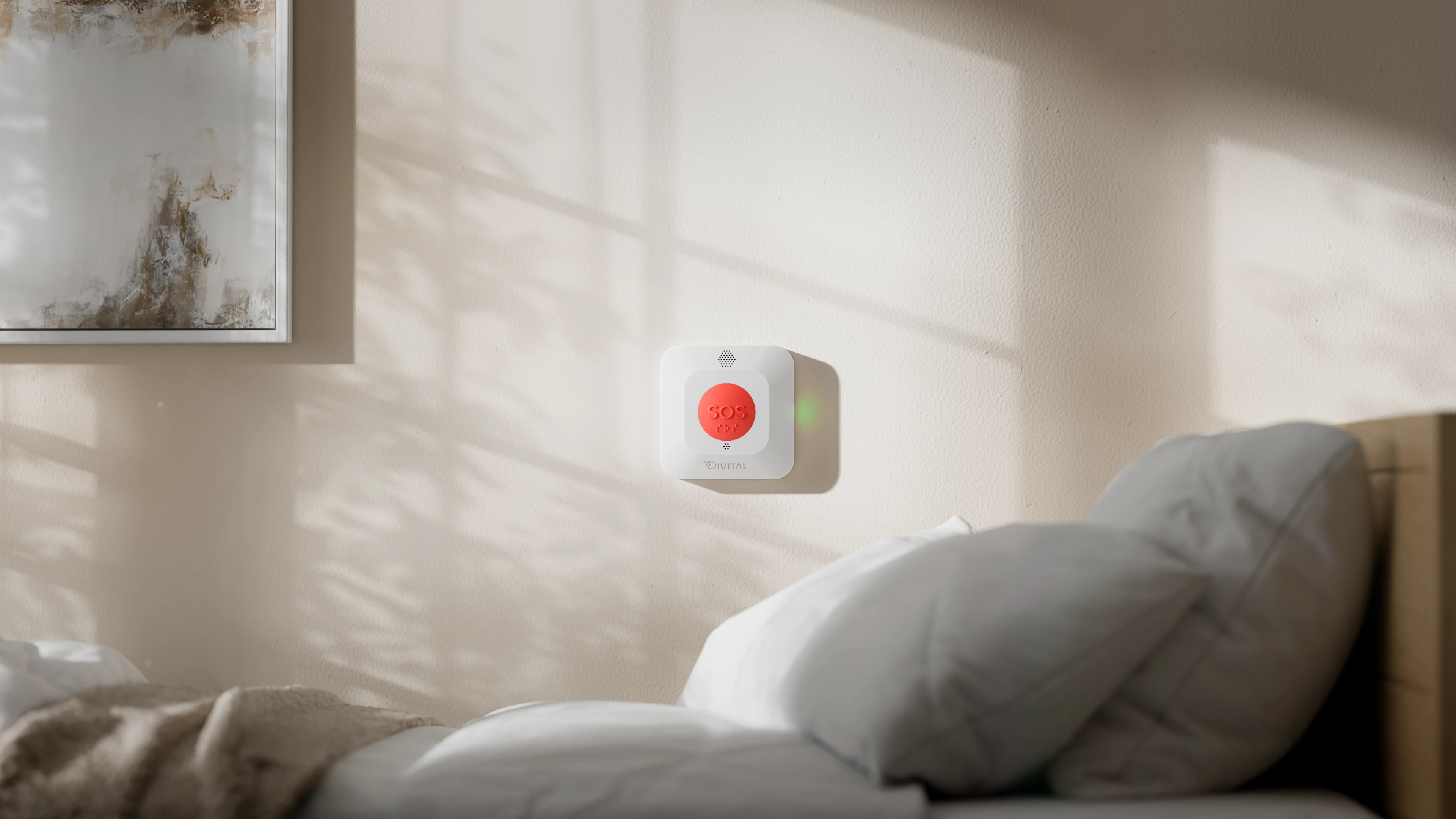

A classic home emergency call system connects to an emergency call center at the push of a button. The Divital home emergency call system can do more: It has an integrated nurse call function and, depending on the living situation, connects to on-site caregivers, the nursing service, or the emergency call center. In addition, there are several ways to call for help: by pressing a button on the base station or wristband, using a pull cord in the bathroom, or by voice activation with a cry for help. If desired, the system can later be expanded with sensors to a complete AAL system with automatic fall detection.
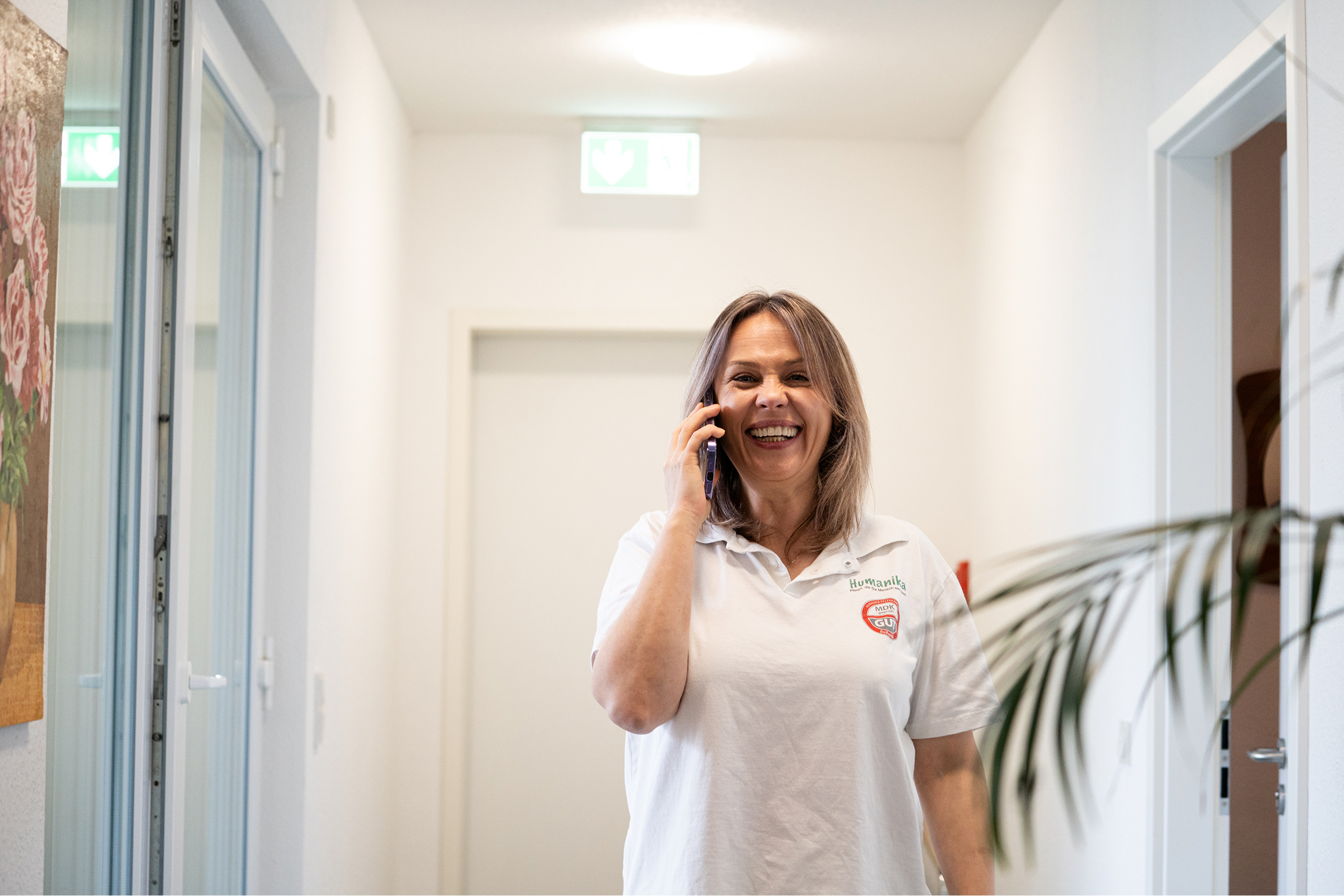
You determine this, per apartment and per resident. In care-sharing communities with 24/7 care, the call goes directly to the DECT phone of the on-duty caregiver, with a direct voice connection to the room. In assisted living, the system connects to the 24/7 emergency call center or your nursing service. Relatives can also be included in the alert chain. If one point of contact does not respond, the system automatically escalates to the next.
Yes. Divital is a qualified home emergency call provider according to § 78 SGB XI and is listed in the directory of nursing aids. The long-term care insurance subsidizes the home emergency call system from care level 1, typically when the user lives predominantly alone. We advise on cost coverage and assist with the application.



















A classic home emergency call system connects to an emergency call center at the push of a button. The Divital home emergency call system can do more: It has an integrated nurse call function and, depending on the living situation, connects to on-site caregivers, the nursing service, or the emergency call center. In addition, there are several ways to call for help: by pressing a button on the base station or wristband, using a pull cord in the bathroom, or by voice activation with a cry for help. If desired, the system can later be expanded with sensors to a complete AAL system with automatic fall detection.
You determine this, per apartment and per resident. In care-sharing communities with 24/7 care, the call goes directly to the DECT phone of the on-duty caregiver, with a direct voice connection to the room. In assisted living, the system connects to the 24/7 emergency call center or your nursing service. Relatives can also be included in the alert chain. If one point of contact does not respond, the system automatically escalates to the next.
Yes. Divital is a qualified home emergency call provider according to § 78 SGB XI and is listed in the directory of nursing aids. The long-term care insurance subsidizes the home emergency call system from care level 1, typically when the user lives predominantly alone. We advise on cost coverage and assist with the application.
Installation is quick: connect the central assistance unit, pair the wristband and wireless pull cord, set up the alert chain, and you're done. No structural changes, no mess. In residential complexes, we work apartment by apartment, so residents can simply stay at home.
The system automatically escalates to the next point in the alert chain, for example, from the on-site caregiver to the on-call service or the 24/7 emergency call center. Every step is logged, ensuring no call goes unanswered.
No, a dedicated internet connection is not a prerequisite. The system can be connected either via the local network (LAN) or via an integrated multi-network SIM. This SIM is not tied to a single mobile provider but automatically connects to the strongest available network and switches independently if a network fails. This ensures the connection to the caregiver, nursing service, or emergency call center remains even if routers or individual mobile networks are disrupted. We will clarify which connection is right for your living situation during a free consultation.





